Artist Statement
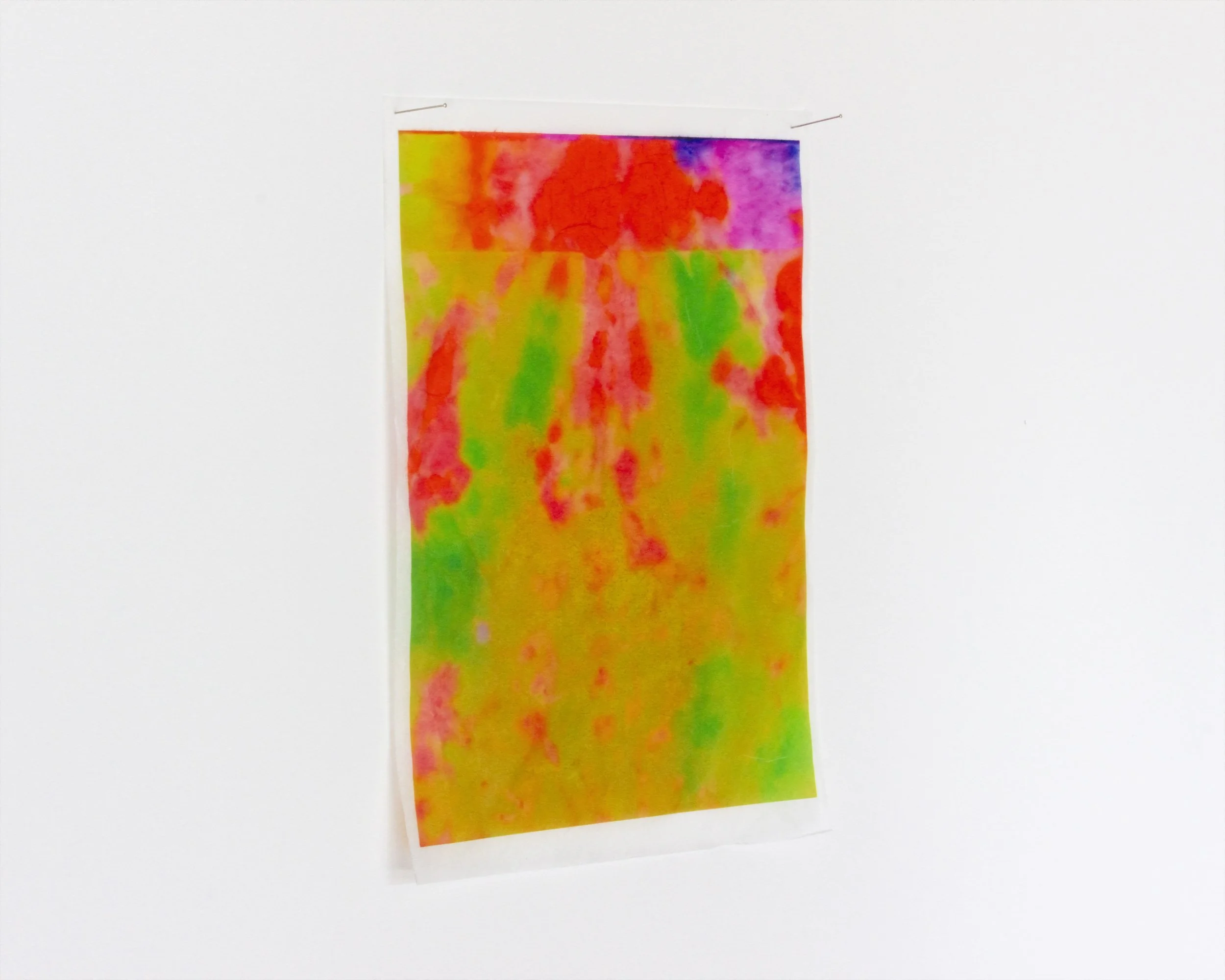
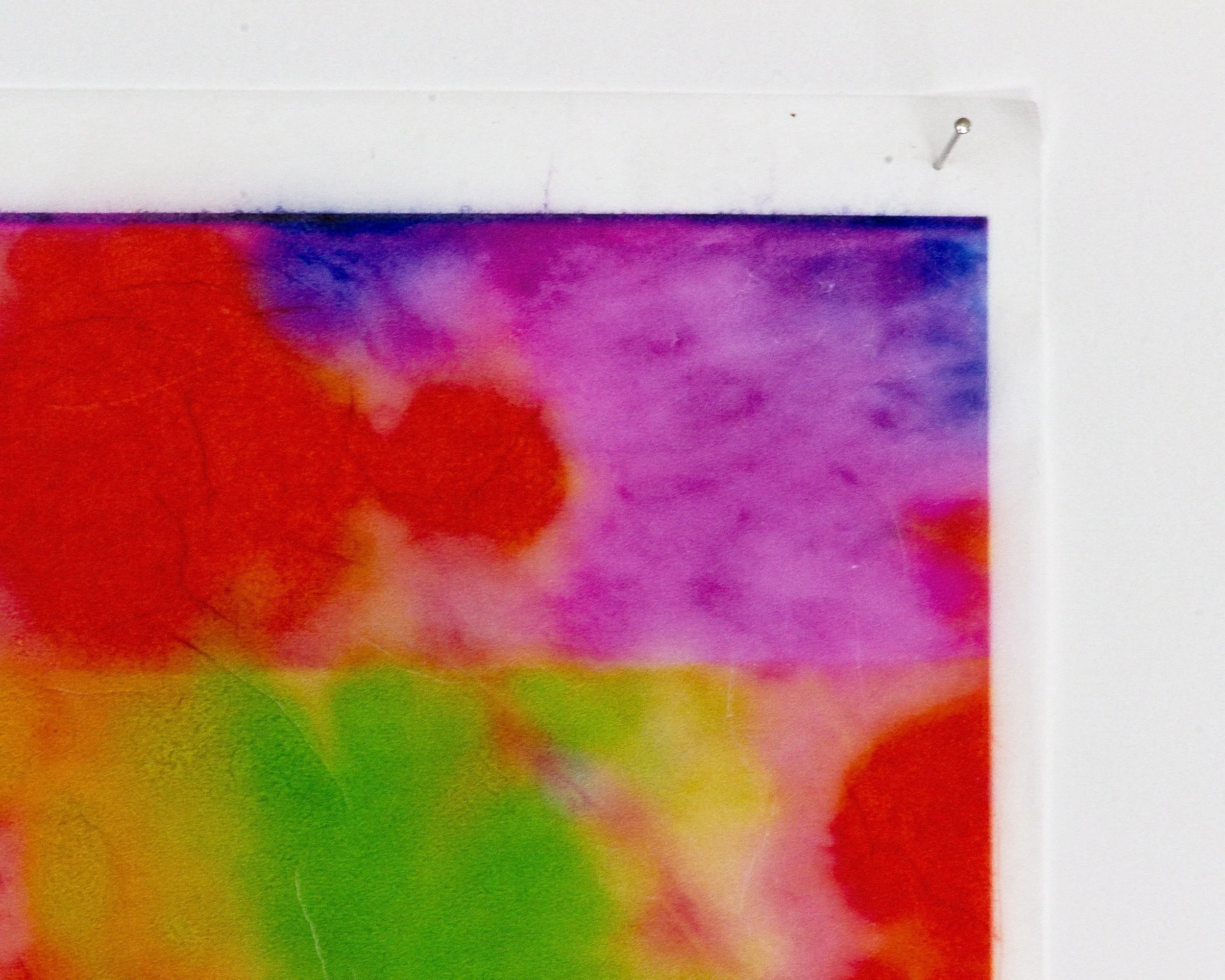
I make inkjet prints on translucent gampi paper. The images develop through scanned objects and photographs, digital layering, and iterative proofing. Before printing, I dampen the sheets so the ink diffuses into the fibers—blooming and bleeding according to saturation, gravity, and the structure of the paper.
More recently, I have forgone framing and begun attaching the prints directly to the wall. The supporting surface, the quality of light, and the viewer’s imagination all become active conditions of the work. In many of the recent prints, light gathers within dark fields of ink, as if the image were slowly coming into or out of view. I’m interested in both the depiction of light and its physical passage through the paper, where it reflects off the wall, backlights the image, and embeds it in the room. I’m interested in the reciprocal relationship between image and architecture—how an image can become a spatial and perceptual intervention.
The works operate simultaneously as photographic images and material events. Accordingly, making them involves both digital technologies—including scanning, Photoshop, and generative AI—and a tactile knowledge of paper, ink, and the behavior of the printer. Their small scale invites close looking, and their installation is legible and direct. What remains is straightforward: a sheet of paper, an image, the architecture of the room, and the conditions of light that allow them to be seen. Hung off the wall, the paper gently sways and is animated by airflow and the movement of people.
Bio
Julian Harake is an artist and architect based in Bozeman, Montana. He works primarily with wet-on-wet inkjet printing on gampi and other Japanese papers, exploring the relationships between images, materials, and architecture. His work has been exhibited in New York, Montana, Oregon, and California. Support includes grants from the Montana Arts Council and Creatives Rebuild New York, as well as residencies at the Santa Barbara Center for Art, Science, and Technology and the Oregon Coast School of Art.
Julian is an Assistant Teaching Professor at Montana State University’s School of Architecture, where he teaches design studios and seminars. He has previously taught at UC Berkeley, Barnard College, Syracuse University, and the New Jersey Institute of Technology, and The New School.
Julian’s essays, artist profiles, and reviews have appeared in Dispatches Magazine, LUM Art Magazine, The Montecito Journal, the New York Review of Architecture, Pidgin, See/Saw, and several published books. He received his B.A. from UC Berkeley and his M.Arch from Princeton University, where he was awarded the Suzanne Kolarik Underwood Thesis Prize.